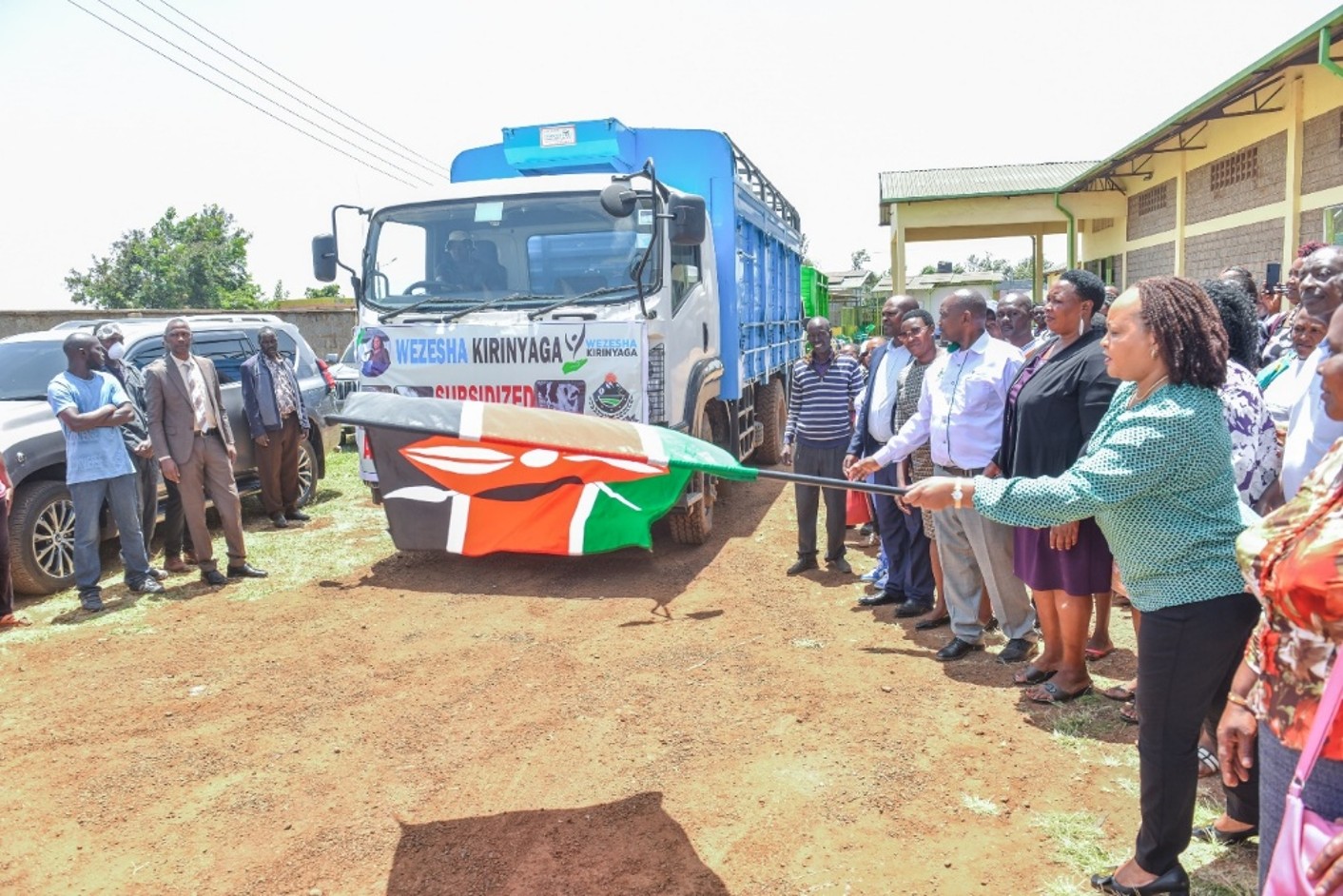
In Kirinyaga County, agriculture remains the backbone of the economy, yet many smallholder farmers still struggle to translate effort into meaningful income due to low productivity, limited market access, and exposure to production risks. Across dairy, poultry, and apiculture value chains, challenges extend beyond production to limited access to knowledge, inputs, finance, and reliable markets, making it difficult for farmers to transition into profitable farming.
The County Government of Kirinyaga responded by strengthening farmer-centered extension services and decentralizing them to the ward level to ensure farmers access timely, practical support within their communities. The model integrates technical knowledge, quality inputs, financial services, and market linkages, positioning extension as a bridge connecting farmers to the broader agricultural ecosystem.
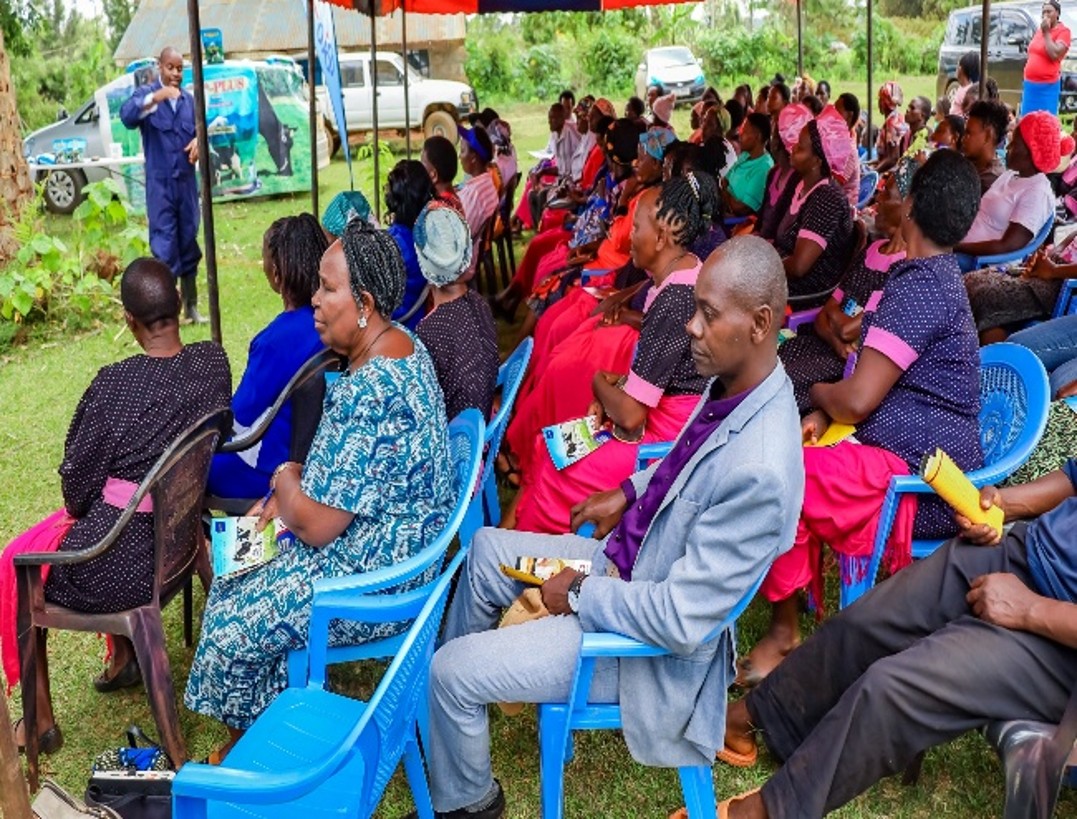
This integrated approach has been applied across multiple value chains with notable results.
Dairy Farming: In dairy farming, farmers were supported to adopt improved breeds through artificial insemination, alongside improved feeding practices, mineral supplementation, and strengthened disease control services. These interventions were complemented by the introduction of agricultural insurance, which enabled farmers to better manage production risks and invest more confidently in productivity-enhancing practices.
As a result, milk production increased significantly from an average of 2.5 litres to 7 litres per cow per day, contributing to an annual production of approximately 86 million litres valued at about KES. 3.1 billion (County Government of Kirinyaga, 2024). This increase has translated into improved household incomes, reduced production losses, and stronger commercial viability of dairy enterprises across the County.
Apiculture: In apiculture, farmers were organized into Farmer Producer Organizations (FPOs) to strengthen collective action and improve market access. 42 Common interest groups were funded with 24 hives each, receiving 1008 modern hives (KTBH). The beneficiary CIGs have formed an FPO recruiting more farmers in collaborative sale of honey. They also received training on value addition and improved hive management and enhancing production capacity and enterprise efficiency.
These interventions have resulted in steady increases in honey production, with farmers recording more consistent harvest cycles and improved output. Previously farmers harvested one cycle once a year, with the modern hives and continuous capacity building, farmers are currently harvesting twice and year (after every rainy season) With each hive producing 30kgs annually from 10kgs annually. Collective marketing has further strengthened bargaining power, leading to better pricing from a Ksh 600 per Kg to Ksh 1000 per Kg. This has improved income stability for participating households. On average, honey produced annually per CIG is an average of 724Kgs. The annual income per beneficiary CIG is Ksh 724,000 and an average of Ksh 36,200 annually per household.
Poultry Farming: In poultry farming, farmers benefited from improved breeds, enhanced husbandry practices, and increased access to affordable credit through SACCOs linked to the National Agricultural Value Chain Development Project (NAVCDP). These interventions enabled farmers to scale up production, improve flock management, and transition into more structured poultry enterprises.
The impact has been increased productivity, expanded enterprise sizes, and improved household income generation. Access to credit has also enabled reinvestment into production systems, supporting sustainability and gradual business growth within the poultry value chain.
Lessons learned
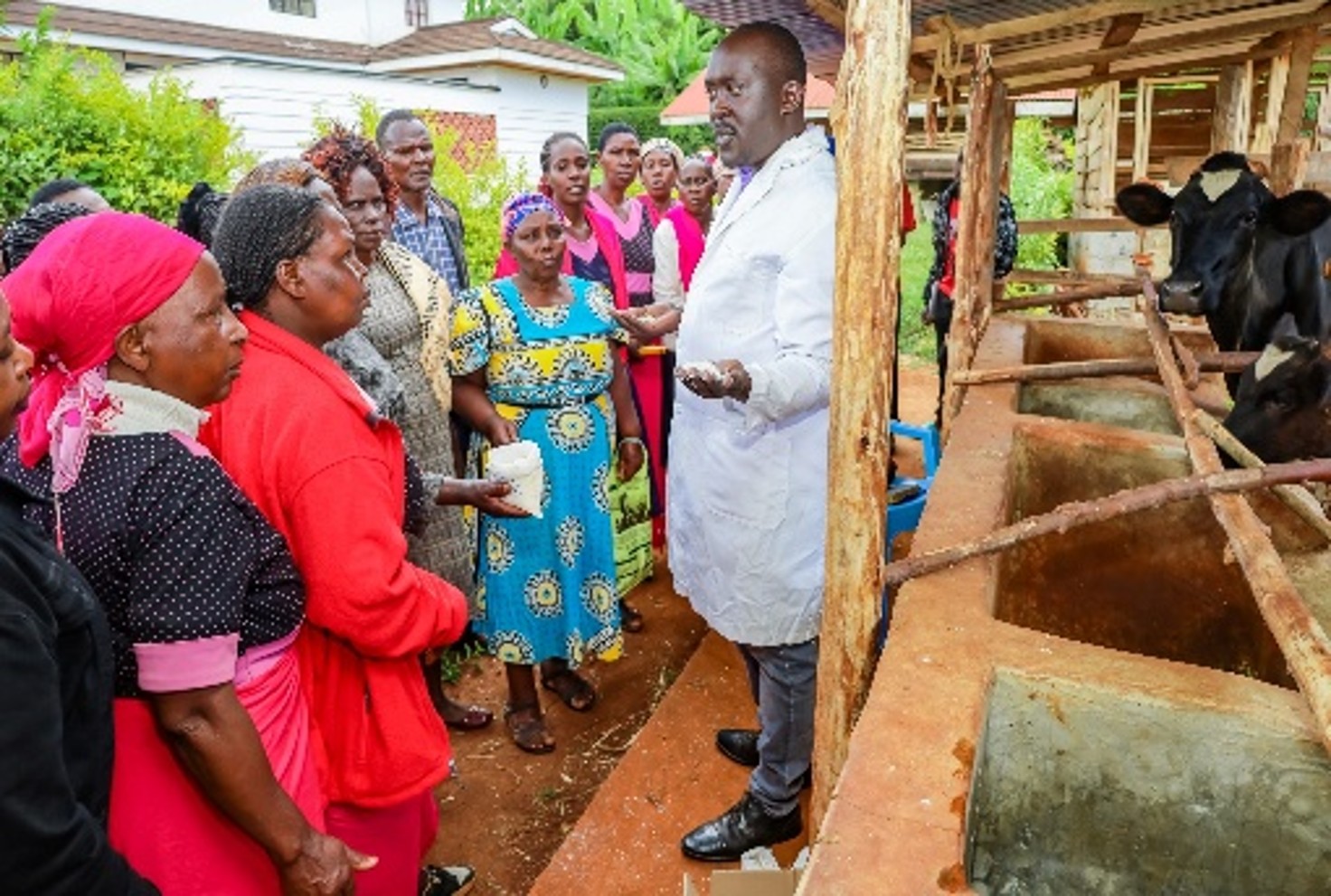
- Continuous extension support is essential for sustaining productivity gains and ensuring adoption of improved practices.
- Partnerships with private sector actors enhance service quality and improve access to inputs, finance, and technical expertise.
- Collective structures such as cooperatives and Farmer Producer Organizations strengthen farmers’ bargaining power and market access.
- Behaviour change takes time, particularly where knowledge gaps exist and new technologies are being introduced.
Building on these lessons, the County is scaling up extension services, strengthening farmer organizations, and promoting value addition to support market growth. There is also increasing focus on digital data systems to track productivity trends, public-private partnerships to drive innovation, and climate-smart agriculture to enhance resilience.
Further Reading
- County Government of Kirinyaga – Department of Agriculture, Livestock, Veterinary and Fisheries Reports
- National Agricultural Value Chain Development Project (NAVCDP) Documentation
- CIC Insurance Agricultural Insurance Products
- Biosciences Kenya Farmer Training Resources
- www.Kirinyaga.go.ke
What initiative has your County taken to strengthen extension services and improve productivity and incomes for smallholder farmers? We would love to hear your story.
Visit https://maarifa.cog.go.ke/ to learn more about the successful initiatives on service delivery our Counties are undertaking.
Compiled by:
- Dr. Gachara John, OGW CECM ALVF - County Government Of Kirinyaga
- Prisca Githaka, Chief Officer ALVF - County Government Of Kirinyaga
- Steffie wambui - Head Livestock
- Titus Murimi - Dairy Development
- Julius Muthii - Sub-County Livestock
- Angela Wangeci - Knowledge Management Champion
- Grace Kimani – Council of Governors, Maarifa Centre