Introduction
For residents around Miritini CDF Health Centre in Mombasa County, seeking healthcare was once accompanied by several challenges. Patients faced long waiting times, inadequate medicines, poor infrastructure and limited security. The facility also had few nurses, while laboratory services were affected by a shortage of technical staff.
Some of these challenges were raised through the Community Score Card (CSC) process. According to Justin Hadera, Chairperson of the Community Health Committee (CHC), residents had concerns about the services they received, including delays, inadequate supplies and gaps in the facility environment. The concerns gave the community an opportunity to move beyond raising complaints to participating in finding practical solutions.
At the registration point, for instance, patients took an average of 15 minutes to be served. Laboratory services were no different due to only one laboratory technologist available to handle samples and process results. In the maternity unit, some expectant and new mothers reported poor treatment and negative attitudes from staff. Ambulance delays also affected emergency referrals.
The challenge, therefore, was not simply identifying what was going wrong. There was a need for a structured mechanism through which residents could raise concerns, engage health workers and agree on actions that could be followed up.
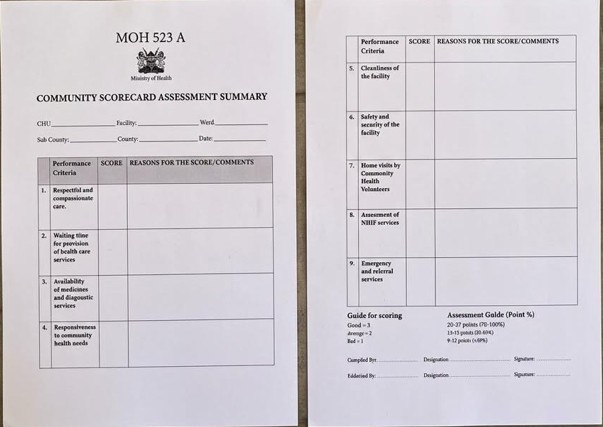
It was against this background that the Community Score Card became an important part of service improvement at the facility. The approach was introduced through the African Leaders Malaria Alliance (ALMA) and later received support from the Stretchers Project before being taken up by the facility and the County Government of Mombasa. The CSC provides residents with a formal platform to assess services, share their experiences and participate in identifying areas that require attention.
Click the story below to read more.